

Hunchback Posture Treatment
Posture isn’t a position. It’s the result of how your body moves.
Why Exercises Alone Don’t Fix the ProblEM
If you’re searching for hunchback posture treatment, chances are you’ve already tried “sitting up straight,” posture exercises, or strengthening your upper back — with little lasting change.
That’s not because you didn’t try hard enough.
It’s because posture isn’t something you hold. It’s something your body expresses based on how it moves.
At Functional Patterns Brisbane, we treat hunchback posture by addressing the biomechanical patterns that create it — not by chasing symptoms or prescribing generic exercises.
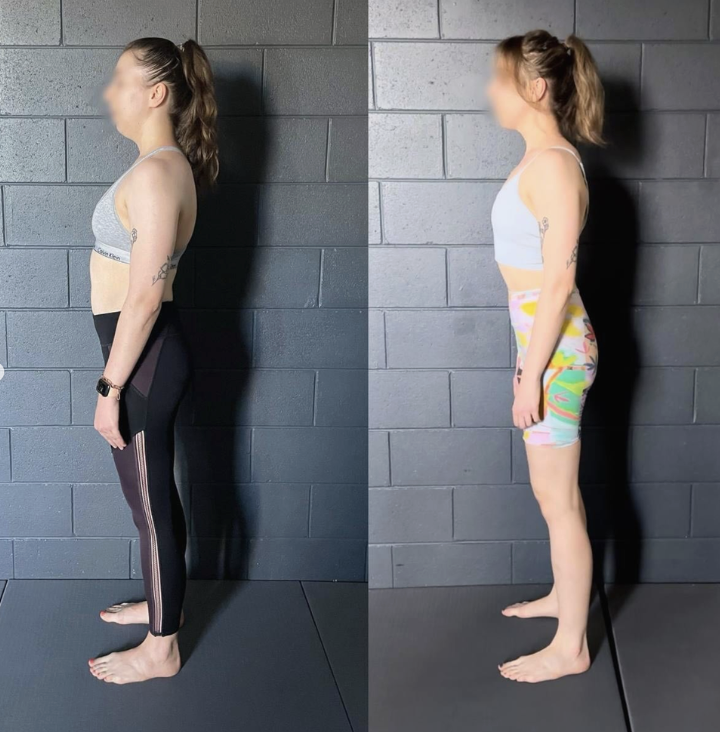
What Is Hunchback Posture?
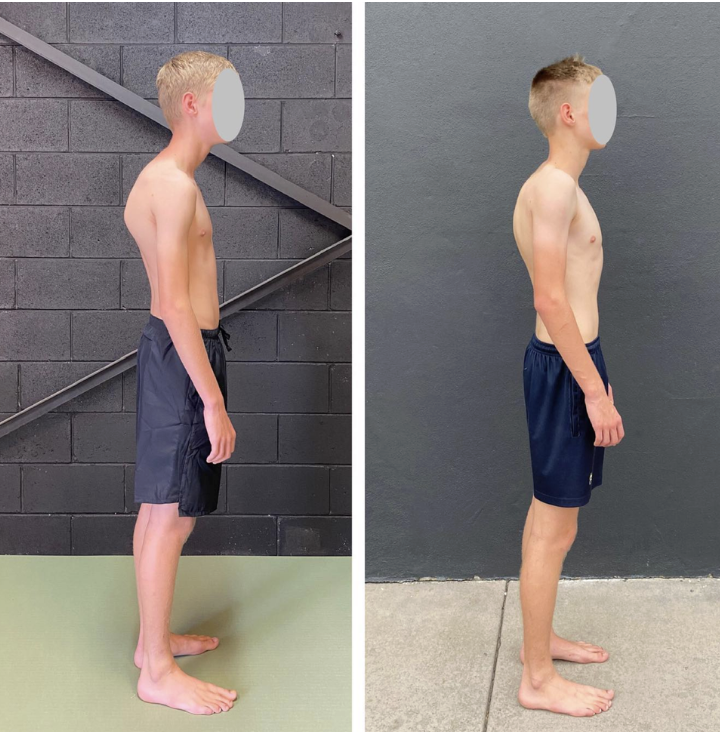
“Hunchback posture” is a broad, non-clinical term people use to describe a rounded upper back, collapsed chest, or forward-leaning posture. In practice, it can involve:
Excessive thoracic kyphosis (upper-spine rounding)
Forward head posture
Ribcage compression
Stiffness through the upper and mid-back
Ongoing upper back or neck pain
These patterns often develop gradually and feel “normal” — until pain, fatigue, or movement limitations appear.
👉 If you’re unsure what pattern you actually have, the first step isn’t exercises — it’s assessment.
Book a short discovery call to clarify what’s driving your posture.
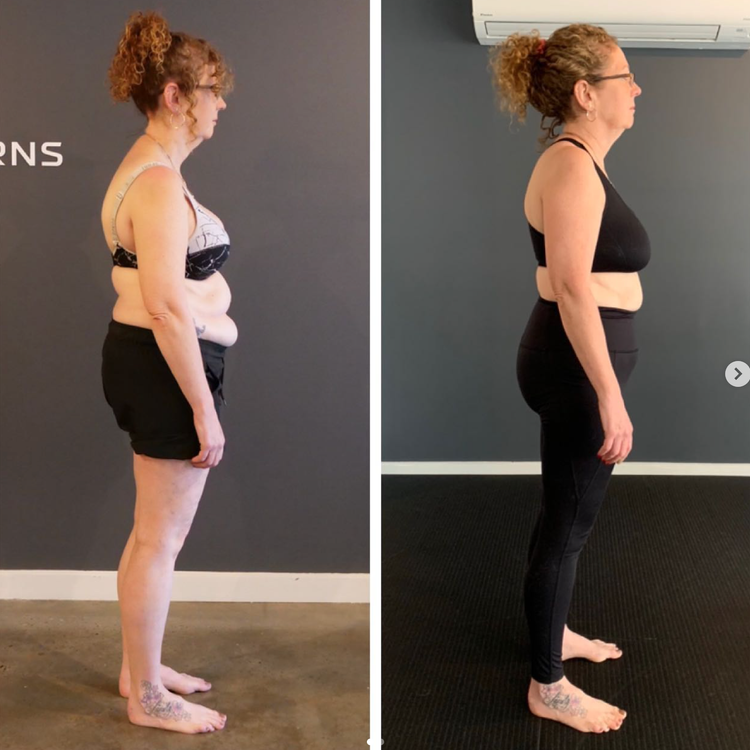
How Common Is Hunchback Posture — and Why Does It Matter?
Hunchback-style postural patterns are increasingly common due to:
Sedentary work and screen exposure
Reduced walking and natural movement
Repetitive gym training that doesn’t transfer to real life
Injuries that subtly alter how someone moves
Over time, poor posture isn’t just cosmetic. It can contribute to:
Persistent upper back pain
Neck tension and headaches
Shoulder impingement or weakness
Breathing restriction
Reduced walking and running efficiency
Posture affects how force travels through the body — not just how you look standing still.
Why Most Hunchback Posture Treatments FaIL
Most conventional hunchback posture treatment plans focus on:
Back strengthening exercises
Core stability exercises
Stretching the chest or upper back
Ergonomic adjustments
While these can offer temporary symptom relief, they rarely create lasting change.
Here’s why:
Strengthening isolated muscles doesn’t change movement patterns
“Core stability” in a gym context doesn’t reflect real-world demands
Posture is governed by how you walk, load, and rotate — not static drills
The nervous system defaults back to familiar patterns once attention is gone
You can strengthen your upper back for years and still hunch — because the body reorganises itself around how it moves most often.
If posture were fixed by exercises alone, most people would already be upright.
What Actually Causes a Hunchback Postural Pattern?
-

Poor Spine Alignment During Movement
Spine alignment isn’t something you “set.”
It emerges from how the pelvis, ribcage, and limbs interact during walking and daily movement.If the spine isn’t loading and unloading efficiently, the upper back often becomes a compensation zone.
-
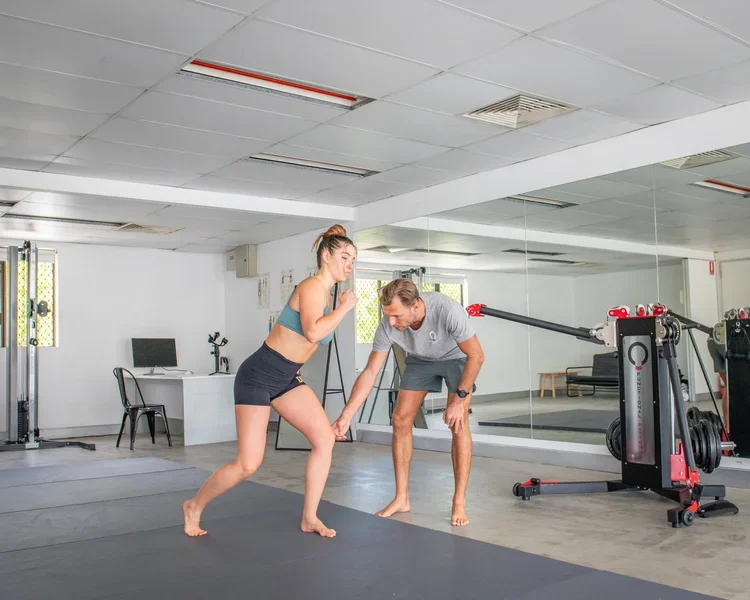
Loss of Thoracic Extension in Gait
When the upper spine doesn’t extend and rotate properly during walking or running, it stiffens over time — even if flexibility looks “fine” on a table.
This lack of rotation leads the compression and stiffness. This can only be addressed properly by restoring rotation. -

Ribcage Compression and Arm Swing Restriction
Restricted arm swing, poor breathing mechanics, and ribcage collapse all reinforce a forward-rounded posture.
This compression pulls the shoulders foward and down and results in a hunchback.
-

Upstream and Downstream Issues
Feet, hips, and pelvis mechanics strongly influence what happens higher up.
Posture is a full-body problem, not a local one. It is extremely important not to only focus on the upper back when treating a hunchback.

Why Spine Alignment Matters More Than “Good Posture”
Trying to “hold yourself upright” often increases tension and fatigue.
Proper spine alignment allows the body to:
Distribute force efficiently
Reduce unnecessary muscle tone
Breathe more freely
Move with less effort
Poor alignment does the opposite — even if you look “corrected” briefly.
That’s why sustainable posture change requires movement re-education, not willpower.
Our Approach to Hunchback Posture Treatment
At FP Brisbane, we don’t hand out posture exercises or generic programs.
We use a biomechanical treatment model focused on long-term structural change.
Comprehensive Posture & Gait Assessment
We assess:
Standing posture
Walking and running mechanics
Spine, pelvis, and ribcage interaction
Breathing patterns
Strength in context, not isolation
This shows us why your body is choosing a hunchback pattern.
Targeted Retraining (Not Random Exercises)
Training focuses on:
Restoring spinal movement where it’s missing
Reintegrating posture into walking and loading
Removing compensations instead of reinforcing them
Progressing toward real-world movement demands
We go far beyond basic posture correction to fix the underlying issues.
Integration Into Daily Movement
The goal isn’t perfect posture in a session — it’s posture that holds under life:
Sitting
Walking
Training
Working
Parenting
Stress
That’s where change becomes permanent.
Upper Back Pain Relief vs Posture Correction
Many people come to us for upper back pain relief, not posture correction.
Here’s the important distinction:
Pain relief can happen without fixing posture
Posture correction almost always reduces pain
If pain is the priority, we still start with assessment — because treating symptoms without understanding cause leads to repetition, not resolution.
👉 If pain is driving this search, a short call can help determine whether posture is the underlying factor.
[Book a discovery call]

Long-Term Posture Change Requires Pattern Change
There is no single exercise, stretch, or cue that fixes hunchback posture.
Lasting change comes from:
Accurate assessment
Biomechanical retraining
Integration into daily movement
Enough exposure for the nervous system to adopt a new default