Trainer Qualifications
The qualifications, standards, and biomechanical training behind the FP Brisbane team.
TRAINER CREDENTIALS
At Functional Patterns Brisbane, every trainer follows a standards-based progression system designed to ensure high-quality, consistent, and evidence-aligned coaching. Our team brings together formal fitness qualifications, additional clinical-adjacent skills, and advanced training in biomechanics, gait sequencing, and long-term movement rehabilitation.
This page outlines the qualifications, certification pathway, and professional standards that guide our work.
Foundational Qualifications
Every FP Brisbane trainer holds Cert III and Cert IV in Fitness as a minimum requirement. These national qualifications provide essential skills in:
✦ anatomy and physiology
✦ safe exercise prescription
✦ coaching and cueing
✦ strength and conditioning fundamentals
✦ movement screening
✦ injury awareness and referral processes
Many team members also hold optional or complementary training such as:
✦ Myotherapy or Remedial Massage
✦ Backgrounds in Physiotherapy or Osteopathy (non-practising roles)
✦ Diplomas in Sport, Movement, or Health Sciences
✦ University studies in health, human movement or exercise science
This gives our team a strong foundation in both theory and practical application before advancing into Functional Patterns’ biomechanical system.
What “HBS Certified” Means
The Functional Patterns certification pathway is called Human Biomechanics Specialist (HBS). Unlike typical fitness certifications, HBS is not automatic and not attendance-based. It is a merit-based progression system where trainers are required to demonstrate outcomes, not just complete coursework.
-
HBS1 – Biomechanical Foundations
Trainers learn the fundamentals of:
✦ gait sequencing
✦ ribcage–pelvis integration
✦ breathing mechanics
✦ joint stacking and pressure management
✦ basic myofascial tensioning
✦ movement assessment using slow-motion video
-

HBS2 – Advanced System Integration
Focuses on higher-level concepts including:
✦ rotational mechanics
✦ multi-planar force transfer
✦ fascial tensegrity under load
✦ advanced gait analysis
✦ chronic pain pattern interpretation
✦ system-wide sequencing under tension
-

HBS3-4 – Complex Dysfunction Resolution
Reserved for practitioners who consistently show:
✦ multi-joint corrective sequencing
✦ long-term client outcomes
✦ integration of breathing, pressure, and rotation under dynamic load
✦ the ability to teach and mentor other practitioners
✦ Use of very advanced chamber sequences
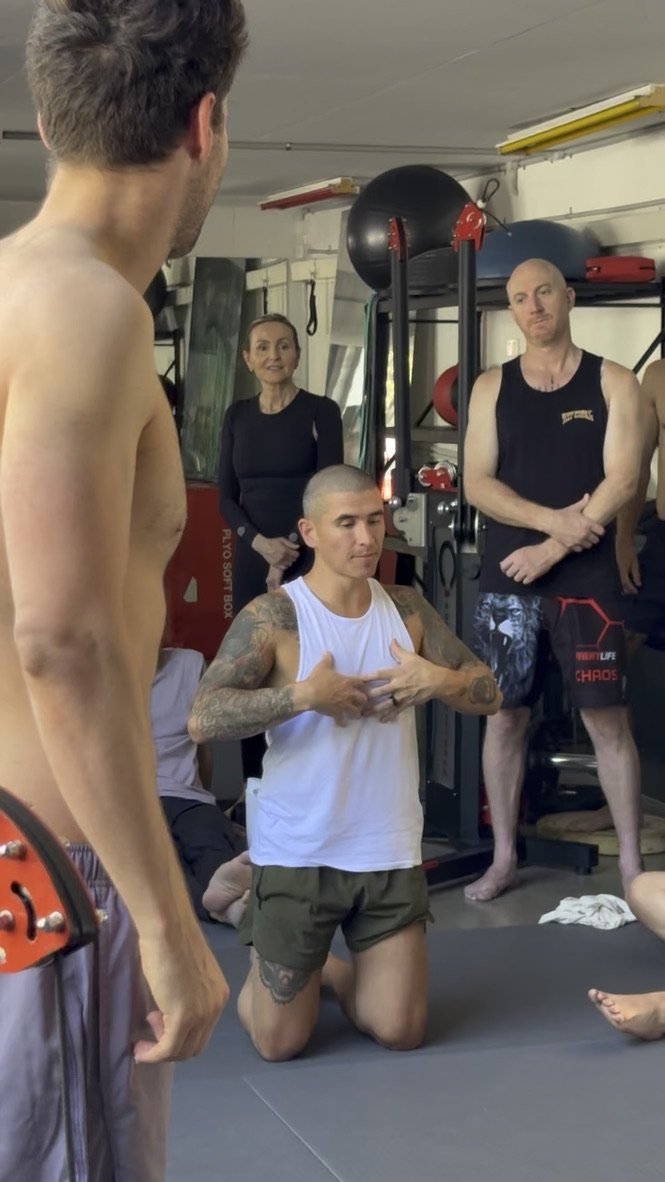
✦ The current highest FP qualification is HBS 4
Important:
You cannot self-enrol into a HBS course. Invitation depends on:
✦ demonstrated client results
✦ proof of biomechanical competency
✦ consistent application of the FP system
✦ passing assessments and instructor review
This meritocratic system ensures that higher-level credentials reflect true capability, not seniority or hours logged. It takes years of consistent work to progress through these qualifications.
What FP Trainers Actually Learn
Our trainers work extensively on biomechanical principles that sit across physiotherapy, strength and conditioning, motor control research, and fascia science. Concepts include:
✦ gait phase mechanics
✦ hip and rib rotation sequencing
✦ closed-chain loading and joint centration
✦ fascial integration and directional tensioning
✦ pressure management via diaphragm and abdominal systems
✦ breathing mechanics for stability and load tolerance
✦ scapular mechanics connected to pelvic rotation
✦ foot mechanics and their influence on the entire kinetic chain
✦ slow-motion analysis for pattern recognition
✦ long-term behaviour change through motor relearning
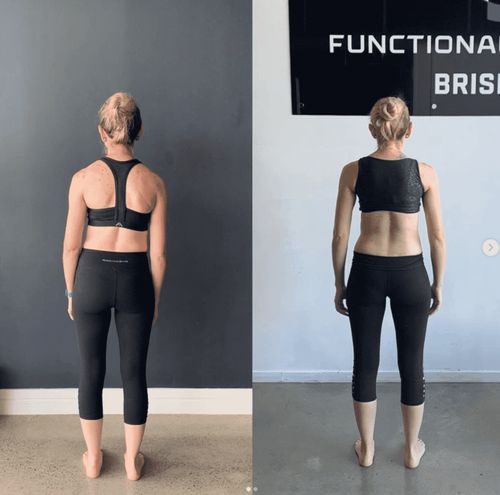
This system emphasises movement quality, not muscle isolation, and reflects current evidence on long-term pain management, gait retraining, and motor control.
Professional Standards at FP Brisbane
To maintain the highest level of safety and integrity, we operate under clear professional guidelines:
-
Scope of Practice
✦ We do not diagnose medical conditions
✦ We do not replace physiotherapy or medical care
✦ We work as movement specialists focusing on biomechanics and long-term motor retraining
✦We collaborate with doctors, physiotherapists, and allied health providers when appropriate
-
Evidence Alignment
Our work integrates concepts supported by research in:
✦ gait modification
✦ motor control retraining
✦ fascia and mechanotransduction
✦ breathing and pressure mechanics
✦ posture and load distribution
✦ chronic pain self-management
-
Collaboration
We encourage multidisciplinary involvement and frequently coordinate with:
✦ GPs
✦ Physiotherapists
✦ Osteopaths
✦ Chiropractors
✦ Surgeons
✦ Massage & Myo Therapists
This ensures clients receive comprehensive care and stay within safe clinical guidelines.
-
Ethical and Communication Standards
✦ clear communication about timelines and expectations
✦ transparent programming
✦ realistic outcome targets
✦ honest scope boundaries
✦ evidence-informed reasoning
✦ emphasis on autonomy, education, and long-term change
Why This System Works
The combination of:
✦ formal education
✦ advanced biomechanics training
✦ results-based certification
✦ slow-motion assessment
✦ long-term sequencing
✦ and multidisciplinary awareness
creates a team capable of addressing complex biomechanical issues in a structured, safe, and sustainable way.
Every trainer at FP Brisbane is committed to delivering high-quality movement coaching grounded in research, professional standards, and real-world outcomes.