
Functional Scoliosis, Lumbar Pain, and Return to Sport
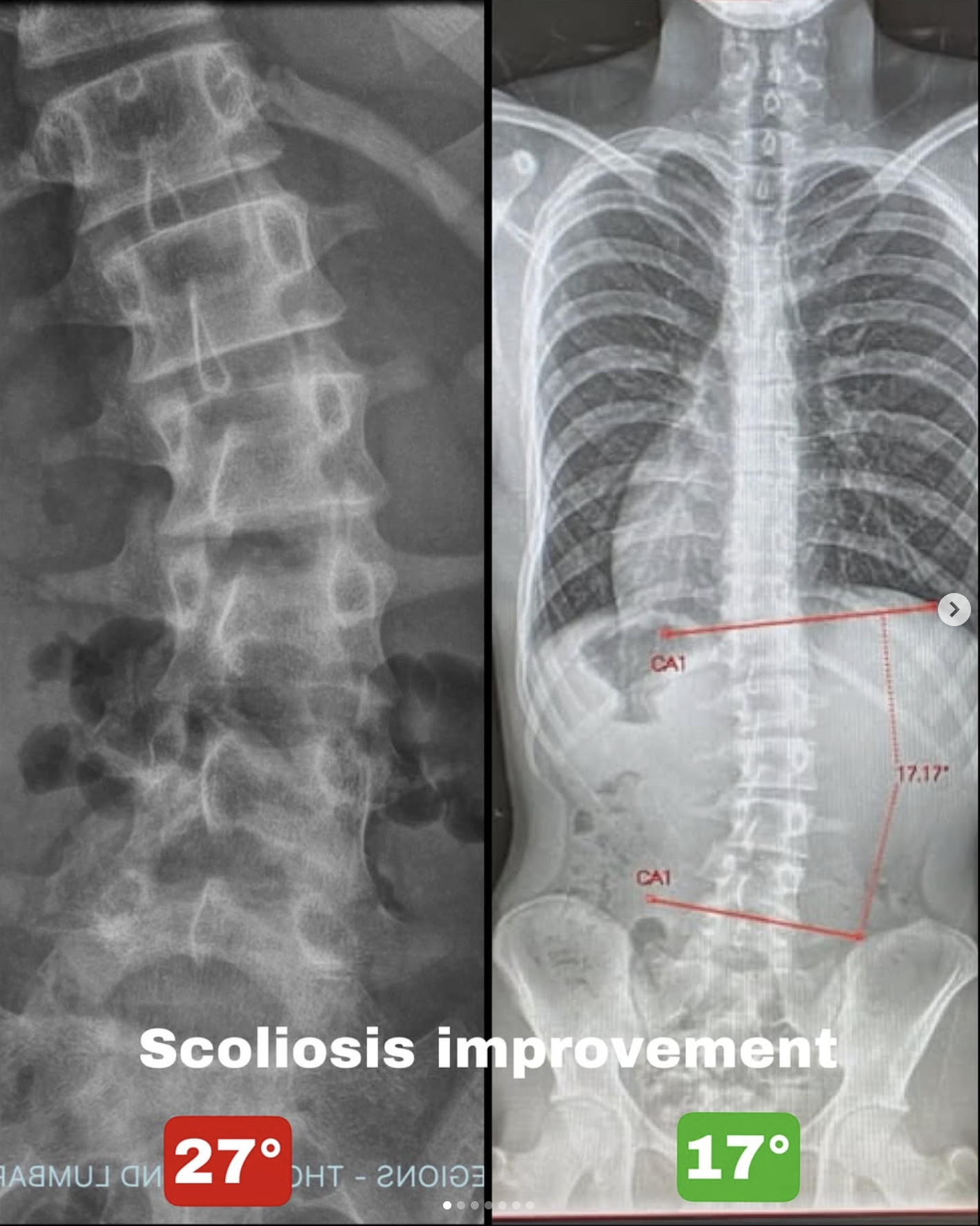
Lumbar Cobb angle improvement: 27° → 17° over 10 months
Training frequency
Once every 2 weeks | FP Brisbane | 10 months
Presenting picture (February 2024)
This client presented with functional scoliosis, significant lumbar pain, and movement-related limitations following injury.
Symptoms on intake:
Lumbar pain: 7/10
Muscle spasms, stiffness, and aching
Pain with bending, lifting, and carrying load
Reduced confidence with exercise and daily movement
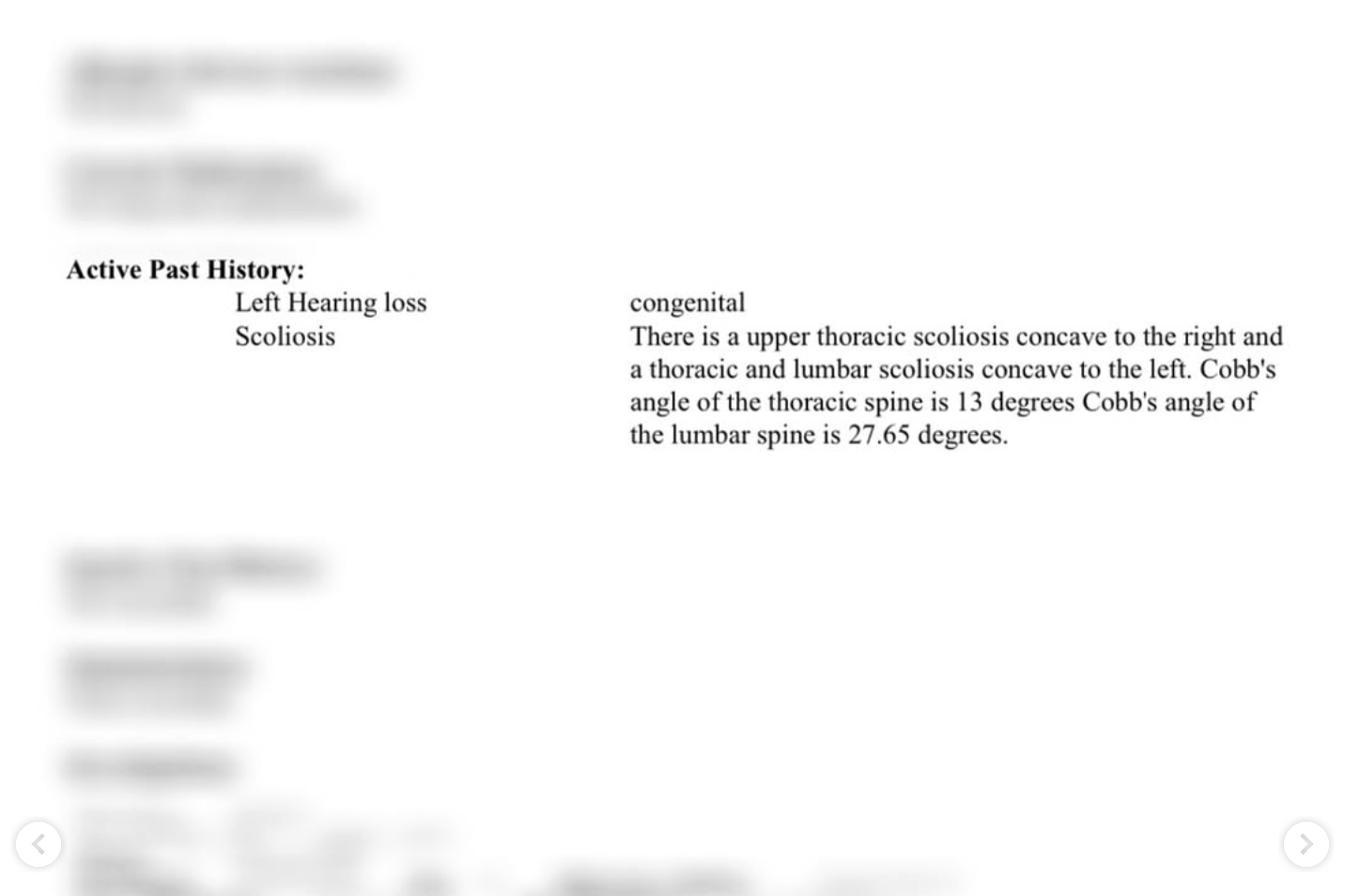
Imaging findings (20/02/2024):
Thoracic Cobb angle: 13°
Lumbar Cobb angle: 27°
Functional observations:
Poor core contribution
Inactive glutes
Depressed shoulder positioning
Limited load tolerance through the trunk and pelvis
At this stage, pain and movement avoidance were the dominant limiting factors.
Training approach
Training focused on mechanical reorganisation, not symptom suppression.
Key priorities included:
Restoring trunk–pelvis integration
Improving posterior chain contribution
Rebuilding core function in movement, not isolation
Reducing compensatory strategies that reinforced asymmetry
Gradually reintroducing load tolerance and athletic patterns
Sessions were kept efficient, progressive, and low-frequency, emphasising carryover into daily life and sport.
Outcomes
Pain & function
Lumbar pain: 7/10 → 0/10
Resolution of daily spasms and stiffness
No pain with bending, lifting, or carrying load
Return to boxing and regular exercise
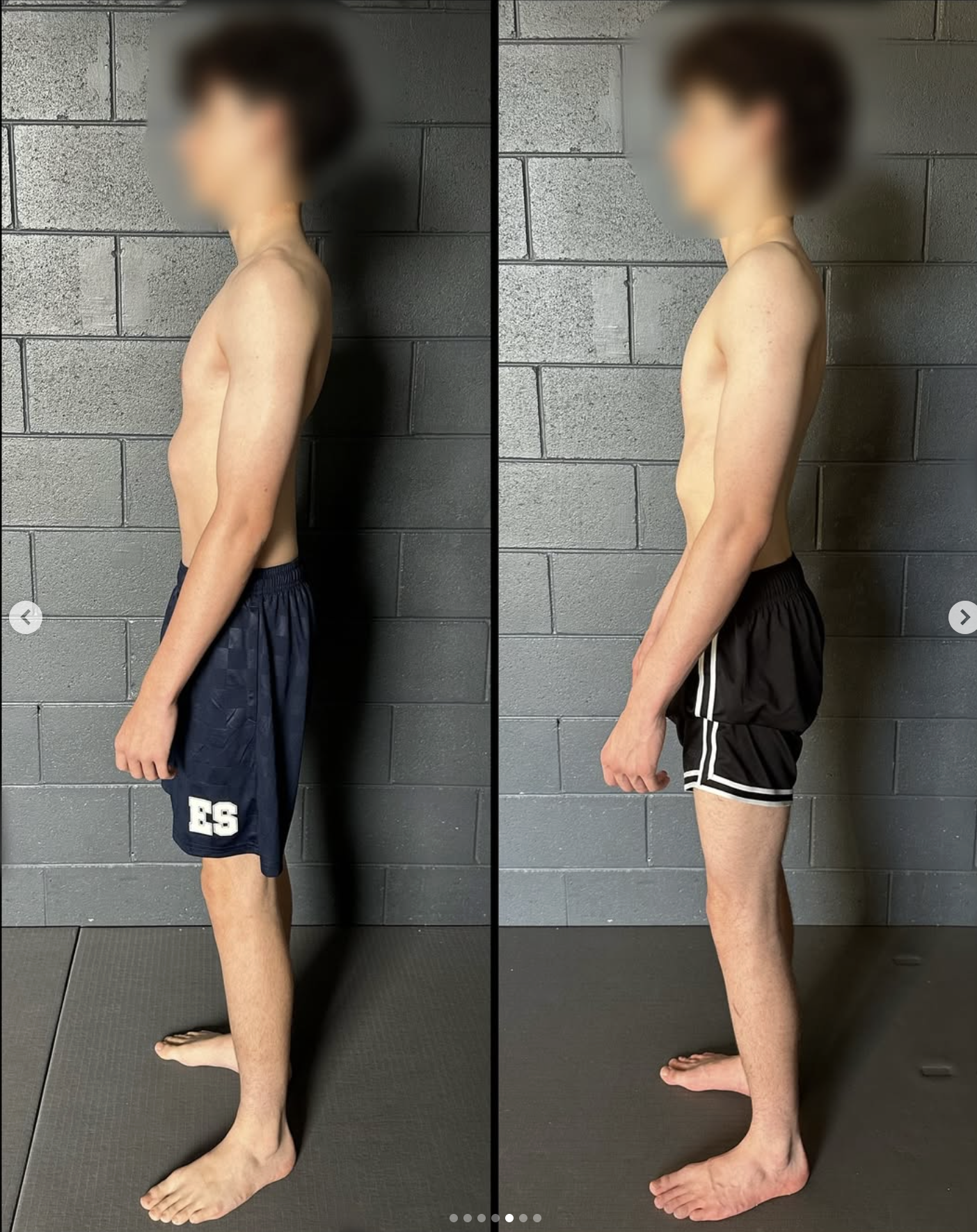
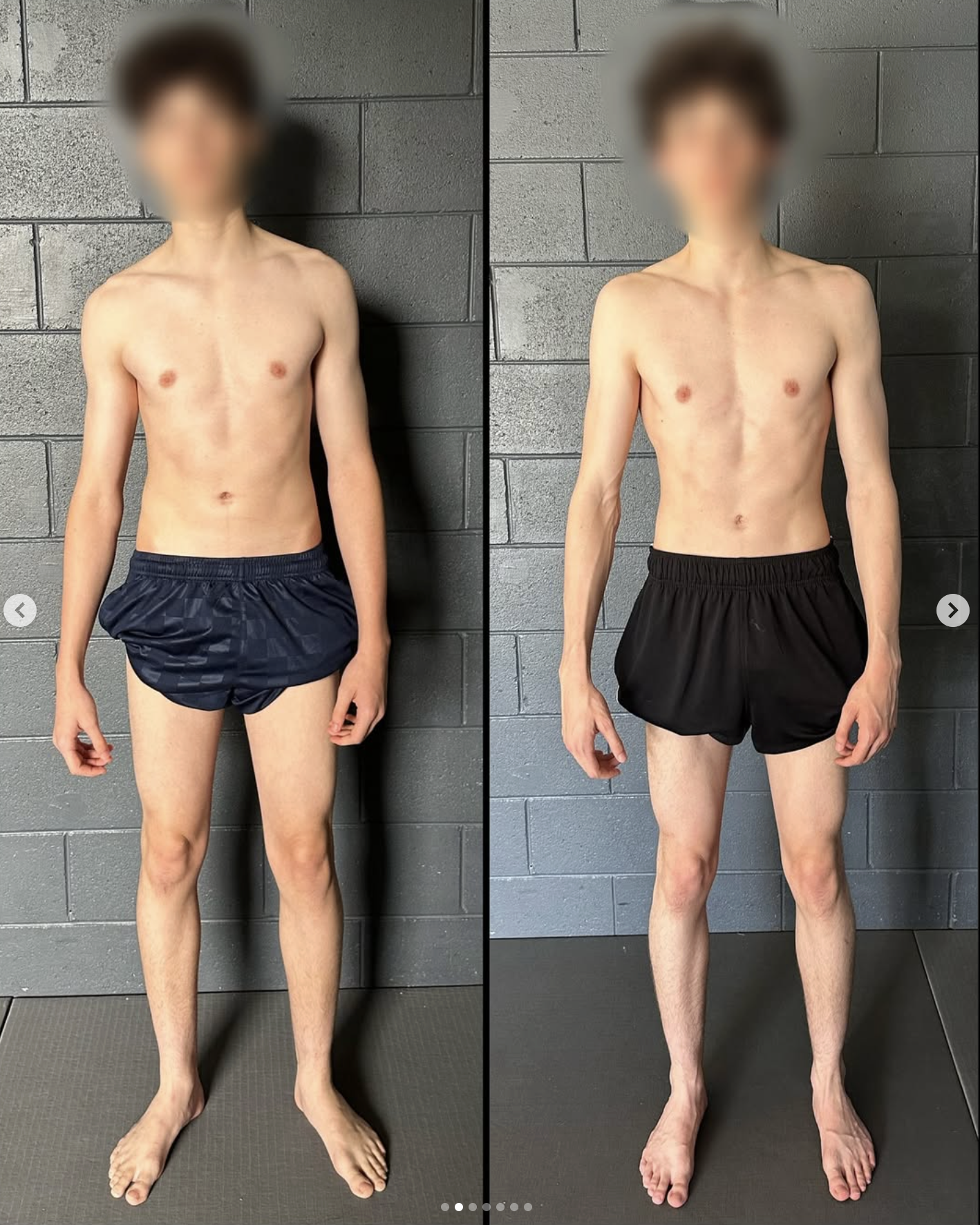
Improved posture, strength, and confidence in movement
Pain resolution occurred within the first few months and was sustained.
Structural & imaging changes
Follow-up X-ray (23/05/2025):
Lumbar Cobb angle: 17° (↓ 10°)
Upper thoracic curve not measured, as it appeared under 10° and not clinically significant
These changes occurred without surgical intervention, bracing, or high-frequency training.
Client experience
“Before FP I had injured myself and ended up with functional scoliosis. I tried three different physios, but none helped me get stronger. My pain was around 7/10 every day.
A couple of months into FP training, I had zero pain. I used to struggle with bending, lifting, and carrying weight — I don’t anymore.
My posture and strength have improved, I’m boxing again, and I can exercise regularly. Training is efficient, challenging, and enjoyable. I feel good now.”
Practitioner commentary
This case reflects functional scoliosis, not a fixed structural deformity.
Key considerations:
Improvements in Cobb angle likely reflect changes in muscular tone, load distribution, and spinal organisation, not “bone reshaping”
Reduced guarding and improved force transfer can significantly alter spinal presentation on imaging
Pain resolution preceded structural change — reinforcing that function drives form, not the other way around
The goal of FP is not to “correct scoliosis” in isolation, but to restore movement conditions under which the body can organise itself more efficiently.
In this case, improved mechanics coincided with:
complete pain resolution
restored athletic participation
measurable reduction in lumbar curvature
Why this case matters
This case demonstrates that:
Significant pain can resolve even when imaging looks concerning
Functional scoliosis can improve when movement mechanics improve
Low-frequency, well-designed training can produce meaningful change
Objective imaging can sometimes reflect functional improvement — but pain and capacity matter most
Considering FP Brisbane?
If you’ve been told to “manage” your back pain, avoid movement, or accept structural limitations — a biomechanics-based assessment may reveal options you haven’t been given.
Functional Patterns Brisbane focuses on restoring how the body manages load, not chasing symptoms or fear.