
Widespread Chronic Pain, Thoracic Outlet Symptoms, and Athletic Regression
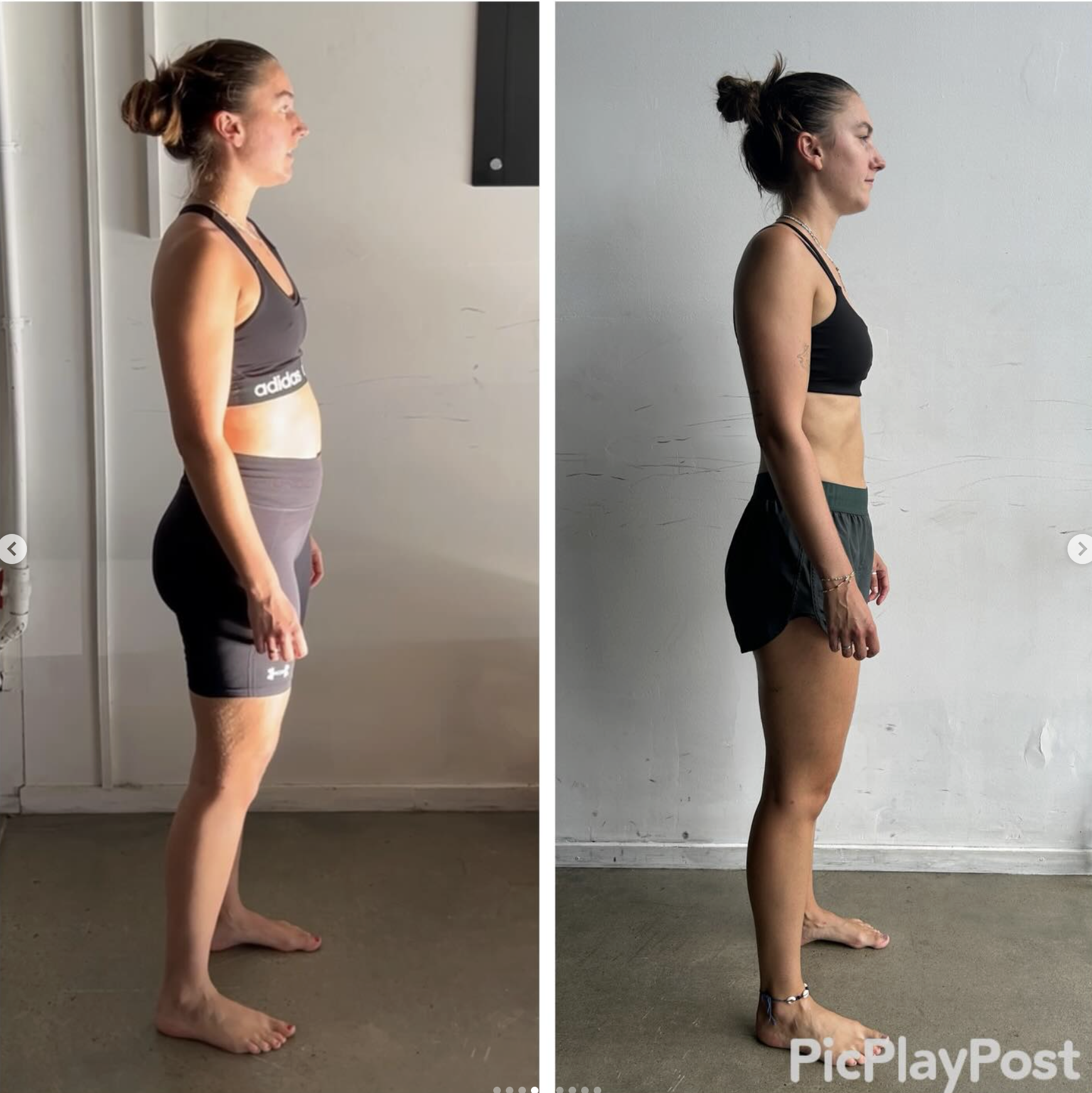
Kate | Full-body pain → functional movement restoration
Presenting issues
Kate presented with long-standing, widespread pain that had been present since childhood. Despite years of seeing practitioners and remaining highly active in sport, her symptoms persisted and progressively impacted her energy, mood, and performance.
Reported pain levels on intake:
Knee pain: 6/10
Lower back pain: 6/10
Neck pain: 8/10
Thoracic Outlet Syndrome (TOS) symptoms: 7/10
Shoulder pain: 8/10
Hip pain: 6/10
Pain was daily, multi-regional, and strongly influenced by posture and movement.
Initial assessment observations
From a Functional Patterns lens, Kate’s symptoms were not isolated injuries — they were systemic compensation patterns.
Key observations included:
Poor global load distribution through the trunk and pelvis
Anterior shift and ribcage positioning contributing to neck and shoulder overload
Upper-body dominance patterns feeding into TOS-type symptoms
Limited force transfer through the hips, increasing stress on knees and lower back
Athletic capacity restricted by pain management rather than movement efficiency
Despite high fitness and sport participation, the system was working against itself.
Training approach
Training focused on restoring whole-body integration, not chasing individual symptoms.
Key priorities included:
Improving trunk and ribcage organisation to reduce neck and shoulder load
Rebuilding hip contribution to offload knees and lower back
Teaching Kate how to move athletically without bracing or guarding
Progressing from corrective work into athletic, multi-planar movement
Early training was supported by Aman Jagpal, establishing a strong mechanical foundation before progressing further under FP Brisbane guidance.
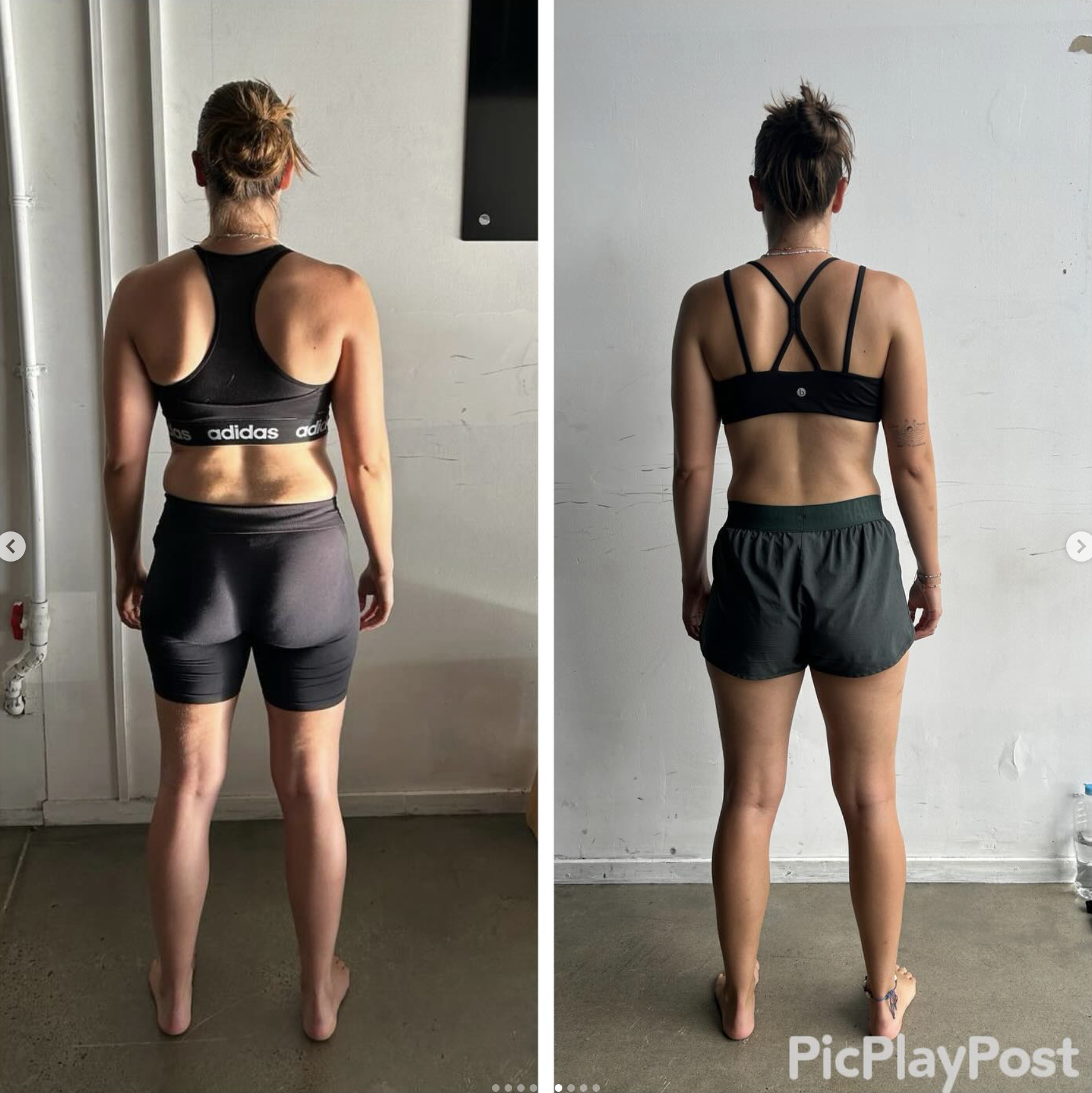
Results
Pain outcomes
Knee pain: 6/10 → 3/10
Lower back pain: 6/10 → 2/10
Neck pain: 8/10 → 2/10
TOS symptoms: 7/10 → 3/10
Shoulder pain: 8/10 → 3/10
Hip pain: 6/10 → 5/10
While some areas are still being addressed, the reduction in global pain load has been substantial.
Functional improvements
Marked reduction in daily pain severity
Improved posture and load tolerance
Increased athletic confidence and movement freedom
Improved energy, mood, and training consistency
Most importantly, Kate shifted from managing pain to building capacity.
Client experience
“I’d had chronic pain all over my body since school. No practitioner ever came close to improving my body. I played sport through pain for years and relied on stretching to manage symptoms.
Training at FP changed the game. Their holistic outlook and client-focused approach got me in the best shape of my life. My posture and pain are incomparable to what they were a year ago.
There’s still work to do — but for the first time, I feel like I’m on a real journey toward being pain free.”
Practitioner commentary
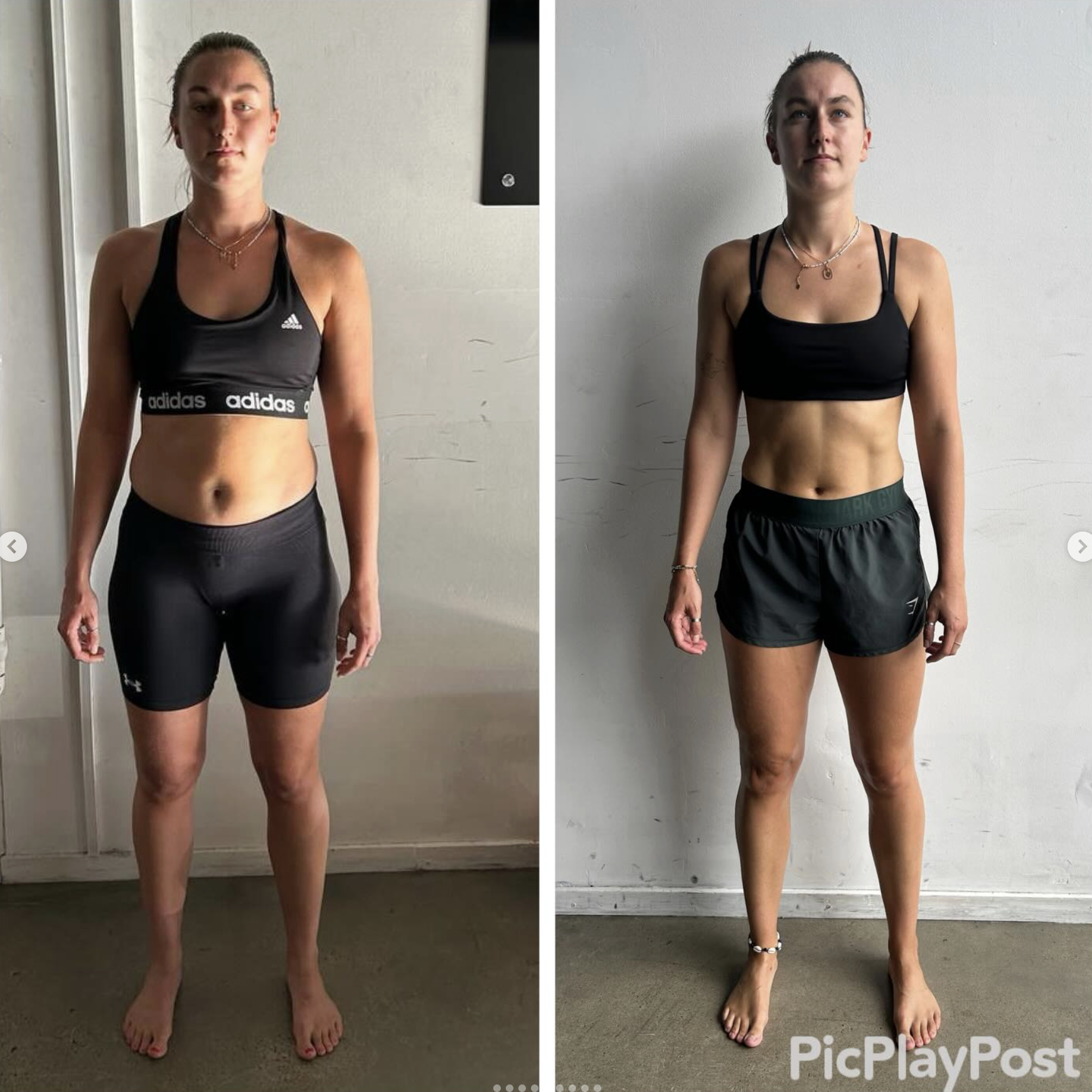
From the side-profile comparison:
The torso appears less anteriorly displaced, reducing constant loading through the neck and shoulders
Ribcage positioning is improved, allowing better force transfer instead of upper-body bracing
The pelvis shows improved stacking relative to the trunk, reducing shear through the lower back
Overall posture reflects less guarding and compression, consistent with reduced TOS and shoulder symptoms
These changes reflect better global organisation, not cosmetic posture correction.
Why this case matters
Kate’s case highlights a key FP principle:
Chronic, widespread pain often persists not because the body is weak — but because movement patterns are inefficient.
By addressing how the body distributes load during movement, pain can reduce even when symptoms span multiple regions.
Considering FP Brisbane?
If you’ve been active, tried multiple practitioners, and still feel like your body is fighting itself, a biomechanics-based approach may reveal what symptom-based care misses.
Functional Patterns Brisbane focuses on restoring how the body works as a system, not chasing pain one joint at a time.